What would it take for Rother to become a place where everyone can thrive, whatever their age?
That was the question at the heart of our recent Summer Connections Network, which brought together organisations interested in Age-Friendly Communities and Rural Wellbeing in Rother for an afternoon of ideas, networking and shared learning.
The event introduced two exciting developments: the new Age-Friendly Rother Network, coordinated by Rother Voluntary Action on behalf of Rother District Council, and a new Intergenerational Grants Programme designed to support projects that bring people of different ages together.
But it was one activity that sparked the biggest conversation.
Imagining Rother in 2040
Rather than beginning with policies, strategies or statistics, we started somewhere much simpler.
We imagined two people living in Rother in 2040.
A 16-year-old who could say:
“This is a great place to grow up. I have a voice and there are lots of opportunities for me.”
And an 85-year-old who could say:
“This is a great place to grow older. I feel connected, active, informed and prepared.”
Then we asked one simple question.
What happened between now and 2040?
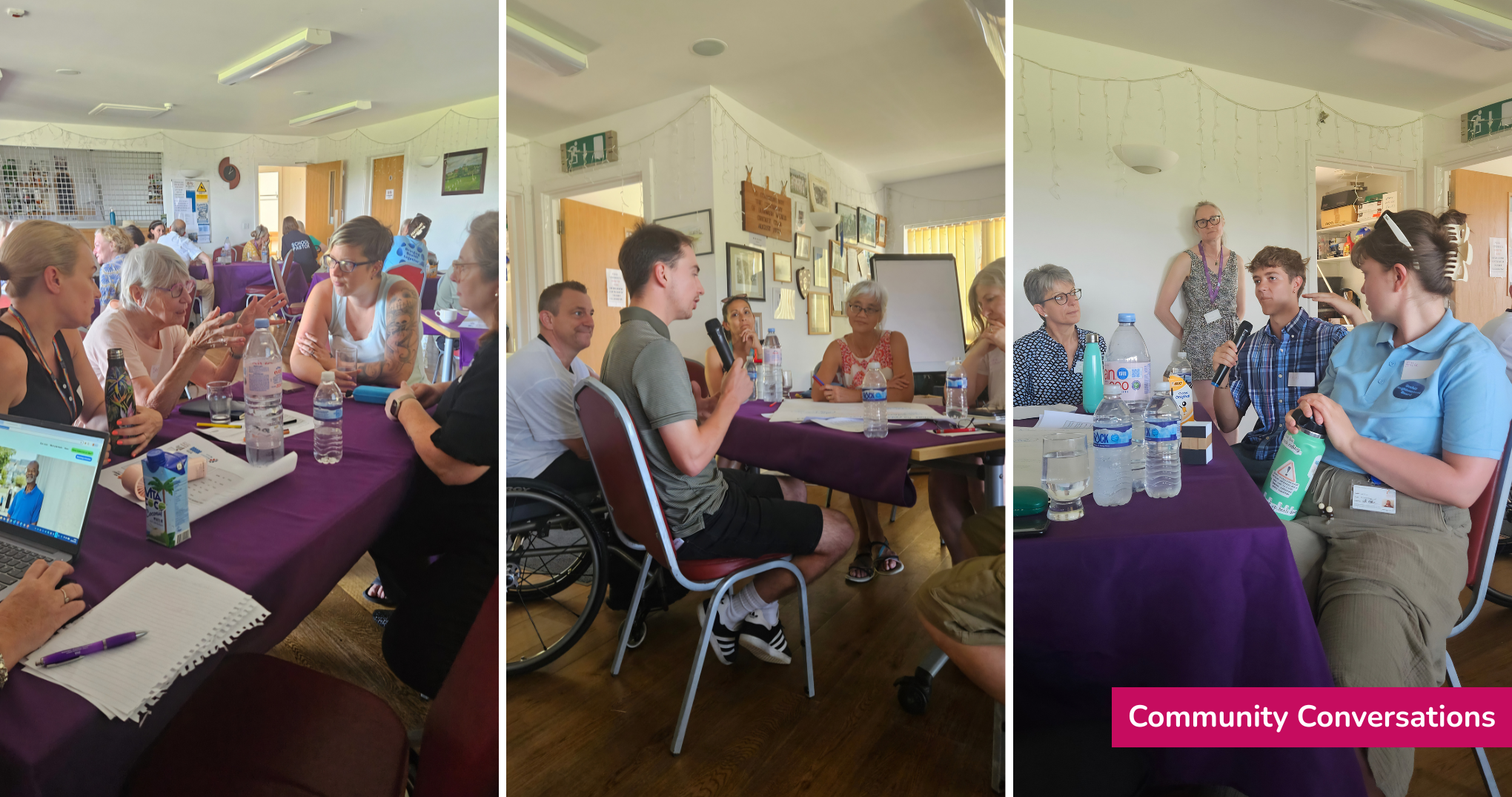
Around each table, people began imagining the journey.
Why this conversation mattered
Of everything that happened during the afternoon, this was the activity that generated the most energy.
Why? Because it wasn’t asking people to comment on policy.
It asked them to imagine hope.
Almost immediately, conversations turned to neighbours, belonging, volunteering, trust and the kind of communities people wanted future generations to inherit.
People weren’t debating organisational structures or funding programmes.
They were imagining what everyday life could feel like if communities truly thrived.
What we heard
Although every table approached the discussion differently, common themes quickly emerged.
People imagined communities
- where neighbours knew and supported one another
- volunteering was part of everyday life
- people of all ages felt connected to where they lived.
They talked about welcoming community spaces, accessible transport, opportunities for young people, clear information, strong local relationships and older people continuing to contribute their skills, experience and knowledge.
Perhaps most interestingly, very few conversations began with buildings or technology.
They began with people.
With relationships.
With trust.
With community spirit.
One future, shared by all generations
One of the most encouraging insights was how much agreement there was across the room.
Although the exercise invited people to think about two different stages of life, the hopes they described were remarkably similar.
Whether imagining growing up or growing older in Rother, participants wanted communities where people felt connected, valued, informed and able to contribute.
It was a reminder that while our ages and experiences may differ, our hopes for the places we live are often shared.
What this means for our communities
Earlier in the afternoon, our own Naomi Robinson introduced a passionate vision behind the new Age-Friendly Rother Network—a partnership that aims to help make Rother a place where people can continue to thrive as they age.
It was striking how naturally the workshop conversations echoed many of the priorities already emerging through that work: connection, participation, accessible information, inclusion and ensuring local people have a voice in shaping their communities.
Perhaps that’s because these aren’t simply policy priorities. They’re human priorities.
For us, the conversation was also a reminder of the important role voluntary and community organisations play—not simply delivering services, but connecting people, building trust, creating opportunities and helping communities shape their own future.
Join the conversation
This is the first in a new series of Community Conversations, where we’ll share ideas, reflections and learning from across Rother’s voluntary and community sector.
Rather than providing all the answers, we hope these conversations encourage us all to pause, reflect and learn from one another.
So we’ll leave you with the same question we asked around every table.
What needs to happen between now and 2040 to make Rother an even better place to grow up and grow older?